Joungle 2.0: A Quirky Handwritten Display Font for Creative Projects
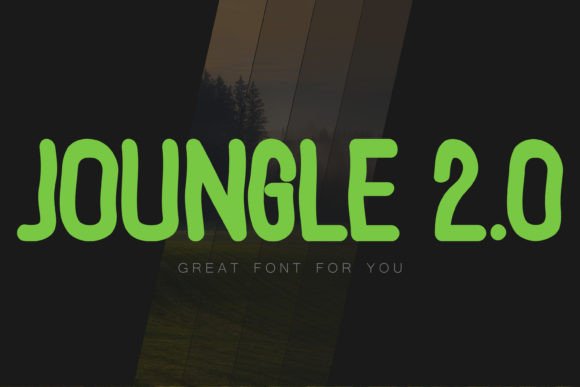
Joungle 2.0 is a distinctive handwritten display font that brings a playful and personal touch to digital and print design. Its unique character set, subtle irregularities, and expressive style make it ideal for projects that benefit from a handcrafted aesthetic. Whether you're working on branding, social media graphics, or DIY crafts, Joungle 2.0 offers a refreshing alternative to more rigid typefaces.
Unlike many fonts that aim for uniformity, Joungle 2.0 embraces the imperfections of handwriting. This makes it particularly appealing for designers looking to add a human element to their work. The font's varying stroke widths and natural flow give it a dynamic feel, which can be especially effective in headings, logos, and other visual elements that require attention-grabbing appeal.
What Makes Joungle 2.0 Distinct?
Joungle 2.0 stands out due to its blend of simplicity and charm. It avoids the overly stylized look of some decorative fonts while maintaining a clear, readable structure. The font’s lowercase letters often feature small flourishes and slight variations, giving it a sense of movement and personality. These characteristics make it well-suited for projects that want to convey creativity without sacrificing legibility.
The font also includes a wide range of glyphs, including standard letters, numbers, punctuation, and symbols. This versatility allows it to be used across different design contexts, from short phrases to longer text blocks. However, its primary strength lies in its use as a display font rather than a body text option.
Another notable feature is the font’s ability to adapt to different design styles. While it has a clear handwritten identity, it can be paired with other fonts to create balanced compositions. For instance, it works well alongside sans-serif or serif fonts that provide contrast and clarity.
Comparing Joungle 2.0 with Similar Options
When considering alternatives to Joungle 2.0, it’s helpful to look at other handwritten or script-style fonts. Fonts like Pacifico, Great Vibes, or Lobster offer similar expressive qualities but may differ in tone and readability. Pacifico, for example, has a more flowing, cursive style, while Great Vibes leans toward a more elegant, formal appearance. Each of these fonts has its own strengths and limitations, making them suitable for different design goals.
Joungle 2.0 falls into a middle ground between these extremes. It maintains a casual, approachable vibe without being too ornate or difficult to read. This makes it a good choice for projects that need a friendly, creative feel but still require clarity. In comparison, some other handwritten fonts may be better suited for specific applications, such as wedding invitations or luxury branding, where a more refined look is needed.
For users who prioritize consistency and precision, Joungle 2.0 may not be the best fit. Its natural variations can sometimes lead to uneven spacing or inconsistent sizing, which might be a concern in professional or high-stakes design environments. However, for casual or artistic uses, these traits are often seen as a positive aspect rather than a drawback.
Best Fit Situations for Joungle 2.0
Joungle 2.0 is most effective in scenarios where a personal, handmade feel is desired. This includes social media posts, greeting cards, t-shirt designs, and other creative projects that benefit from a unique visual identity. Its flexibility also makes it useful for branding elements like logos or taglines that want to stand out without being too flashy.
For example, a small business owner creating custom merchandise might find Joungle 2.0 ideal for adding a personalized touch to product labels or packaging. Similarly, a teacher or educator could use it to design engaging lesson materials that feel more approachable and fun.
Another practical use case is in digital content creation. Bloggers, YouTubers, or influencers looking to add a distinct visual style to their thumbnails or banners might choose Joungle 2.0 to differentiate their content from others. Its quirky nature can help capture attention while maintaining a cohesive brand image.
Limitations and Tradeoffs
While Joungle 2.0 has many advantages, it’s important to recognize its limitations. One key consideration is its suitability for long-form text. Due to its informal style and variable spacing, it may not be the best choice for body copy in documents, websites, or publications where readability is critical.
Additionally, the font’s uniqueness may not align with all design aesthetics. Some users may find its irregularities distracting or unprofessional, depending on the context. In such cases, a more structured font might be a better option. It’s also worth noting that not all design software or platforms support every font format, so compatibility should be checked before finalizing a project.
Another tradeoff is the potential need for additional design work. Because of its handwritten nature, users may need to adjust spacing, alignment, or kerning to achieve the desired look. This can add time and effort compared to using more standardized fonts that require minimal tweaking.
When to Choose Joungle 2.0 Over Alternatives
Joungle 2.0 is a strong candidate when the goal is to introduce a sense of individuality or warmth into a design. If a project requires a friendly, unconventional, or artistic tone, this font can be an excellent choice. It’s particularly effective when paired with bold colors, illustrations, or other eye-catching elements that complement its expressive style.
However, if the focus is on professionalism, clarity, or consistency, other fonts may be more appropriate. For instance, a corporate website or a formal report would likely benefit from a clean, modern typeface rather than a quirky handwritten one. In these cases, the decision comes down to the intended message and audience.
Ultimately, the best way to determine whether Joungle 2.0 is right for a project is to experiment with it in different contexts. Testing the font in various design scenarios can help reveal its strengths and weaknesses, allowing for a more informed decision.
Realistic Examples and Practical Use Cases
Consider a local bakery that wants to update its logo and marketing materials. Using Joungle 2.0 for the logo could give the brand a more personal and artisanal feel, distinguishing it from larger, more commercial competitors. Similarly, a craft store offering custom sign-making services might use the font to showcase sample designs that highlight its unique style.
In another scenario, a graphic designer creating a series of motivational posters might use Joungle 2.0 to add a whimsical touch to the text. This could help the posters stand out in a crowded market while maintaining a relatable and encouraging tone. The font’s variability could also be used creatively to emphasize certain words or phrases, adding visual interest to the composition.
For educational purposes, a teacher designing a classroom newsletter might find Joungle 2.0 useful for headings or section titles. Its playful appearance could make the content feel more engaging for students, encouraging them to pay closer attention to the information presented.