Hopey: A Retro-Inspired Display Font for Creative Projects
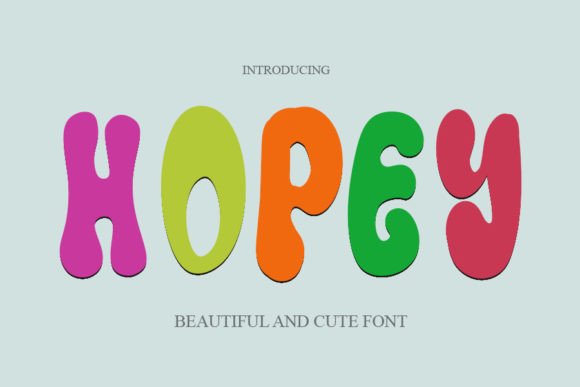
Hopey is a display font that captures the essence of retro design with its groovy, playful aesthetic. Designed for visual appeal, it brings a sense of nostalgia and fun to any project that requires a distinctive typographic voice. Whether used in branding, web design, or print materials, Hopey offers a unique style that stands out from more conventional typefaces.
What Is Hopey?
Hopey is a hand-drawn, display-style font that features irregular shapes and a casual, organic feel. Its design draws inspiration from 1960s and 1970s typography, making it ideal for projects that aim to evoke a vintage or whimsical atmosphere. The font's character is both friendly and bold, allowing it to serve as a focal point in various design contexts.
Unlike serif or sans-serif fonts that prioritize readability, Hopey is best suited for short text elements such as headlines, logos, and titles. Its irregularity and expressive strokes make it less suitable for large blocks of body text but highly effective when used strategically.
Why Consider Hopey?
Designers and developers may find Hopey appealing for several reasons. First, its retro vibe can add a unique personality to a project, helping it stand out in a crowded market. This makes it particularly useful for creative industries such as music, fashion, and entertainment, where visual identity plays a crucial role.
Additionally, Hopey’s friendly and approachable look can help create a sense of warmth and accessibility. It works well for brands that want to communicate a relaxed, fun, or artistic image. For instance, independent artists, boutique businesses, or community-driven initiatives might use Hopey to reflect their values and style.
Benefits of Using Hopey
One of the primary benefits of using Hopey is its ability to convey a specific mood or tone. Its informal, hand-crafted appearance can make a design feel more personal and authentic. This can be especially valuable in marketing campaigns or branding efforts that aim to connect with audiences on an emotional level.
Another advantage is its versatility. While it is primarily a display font, it can be paired with other typefaces to create balanced and visually interesting layouts. When used in moderation, Hopey can add a dynamic element to a design without overwhelming the overall composition.
Tradeoffs and Considerations
Despite its appeal, there are tradeoffs to consider when using Hopey. Its irregular structure may affect legibility, especially at smaller sizes or in low-resolution environments. This means it is not ideal for body text or situations where clarity is paramount.
Additionally, because of its distinct style, Hopey may not fit all design themes. It works best in projects that intentionally embrace a retro or playful aesthetic. In more formal or professional settings, it could appear out of place or even distracting.
Designers should also be aware of licensing and usage rights. Depending on the source of the font, there may be restrictions on how it can be used commercially or in specific formats. It is important to verify these details before incorporating Hopey into a project.
Situations Where Hopey Fits Well
Hopey is particularly well-suited for projects that benefit from a strong visual identity. For example, it can be used in album art, social media graphics, or promotional posters where a bold and expressive typeface enhances the message. Its retro style also makes it a good choice for branding that targets younger, trend-conscious audiences.
It is also effective in editorial design, such as magazine covers or book titles, where the font can add a sense of energy and creativity. In these contexts, Hopey can help differentiate a publication or product from competitors.
Situations Where Alternatives May Be Better
In contrast, there are scenarios where alternative fonts may be more appropriate. For instance, in corporate or academic settings, a more traditional typeface like Times New Roman or Helvetica may be preferred for its professionalism and readability. Similarly, in digital interfaces, a clean, modern font might be better suited for user experience purposes.
For projects that require high legibility across multiple platforms, a sans-serif font with consistent spacing and clear letterforms may be a safer choice. Designers should evaluate the context and purpose of their work before deciding whether Hopey is the right fit.
Decision-Making Insights
When considering whether to use Hopey, designers should ask themselves a few key questions. Does the project benefit from a bold, expressive typeface? Will the font enhance the intended message or aesthetic? Are there any constraints related to readability or usage rights?
Testing the font in different sizes and contexts can also provide valuable insights. Creating mockups or prototypes allows designers to see how Hopey performs in real-world applications and whether it meets the project’s goals.
Ultimately, the decision to use Hopey depends on the specific needs and objectives of the project. It is a powerful tool for adding personality and visual interest, but it requires careful consideration to ensure it aligns with the overall design strategy.